| Kickstarter | GitHub | Install | Contact |
| Kickstarter | GitHub | Install | Contact |

My work on Pi-KVM takes a lot of time and effort. I'm developing new features, providing user support, testing hardware, admining project's servers, maintaining the package repository and much more. I make a lot of other small things that take up my entire work day :)
If you find Pi-KVM useful or it has saved you a long trip to check on an unresponsive server, you can support my job either regularly or through one time contributions.
Thanks to the kind people who support me, Pi-KVM becomes my 100% full time job!
As a thank you, each sponsor will be mentioned in the thanks-section on GitHub and in the Pi-KVM web interface!
With a company and open to a sponsorship? Mail me!
If you have read this far, then let me present myself :)
Several years ago, in 2015, I was visiting my parents (over 1000 miles away) and my home server died while I was enjoying my mom's delicious cake. It was frustrating, I had to ask a friend to go to my place and reboot the server. After that, I decided to buy a KVM over IP. When I searched online I was shocked to discover that quite a basic KVM over IP cost over $500! What made them cost so much?
I read a lot of articles and reviews before buying one and in the end, I decided not to. They weren't just overpriced; I would also get crappy hardware with buggy proprietary software. This was unacceptable! I decided I was not going to pay that much money, it was a matter of principle.
That’s how it all started. I took a Raspberry Pi, an analog composite video (RCA) to USB video capture adapter I used to digitize old VHS tapes, a VGA to composite video converter, wrote some code and this became the very first version of PiKVM. For the keyboard and mouse, I used a PS/2 to USB adapter and emulated PS/2 signals using GPIO. The device was cheap, primitive, but it worked!
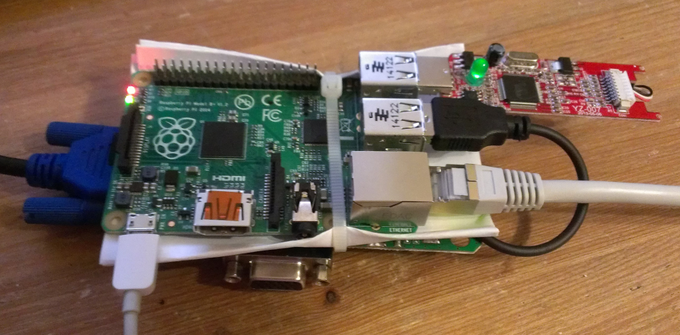
One of the very first prototypes, 2015
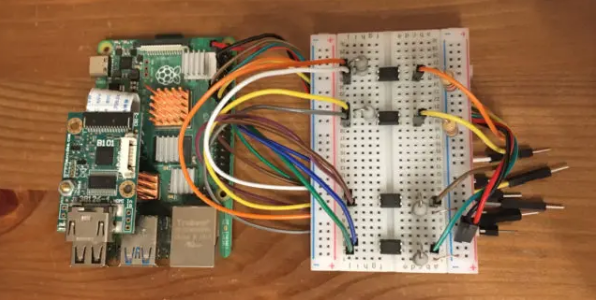
I published the code and the assembly instructions on GitHub, continued to improve it, and over time I also replaced all the hardware. The next version had HDMI, USB-OTG to emulate the keyboard and mouse, and even a mass storage drive on Raspberry Pi 4. At some point, PiKVM became a better alternative than many commercial devices! Most importantly, it was a fully open project that anyone could build by themselves.
Our Discord community grew rapidly and gained thousands of users who were happy to build their own PiKVMs. When I quit my job due to COVID-19, the community started supporting me by sending donations on Patreon and PayPal, and PiKVM became my full-time occupation (by the way, thank you again! A full list of those kind people can be found on GitHub).
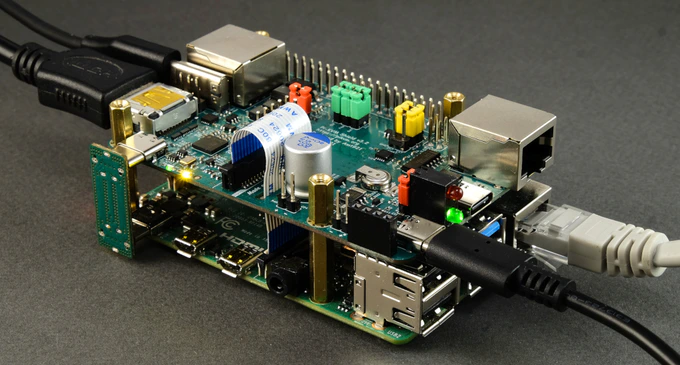
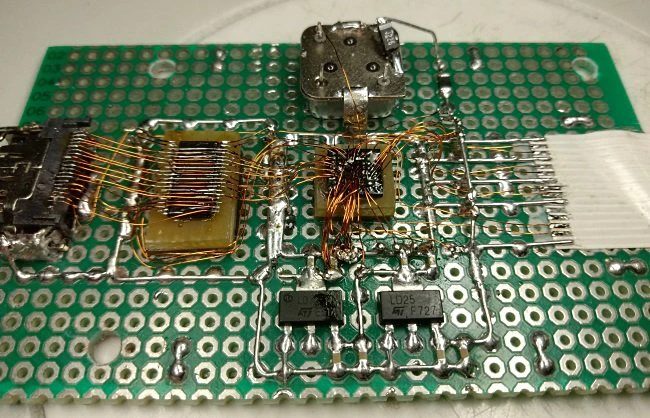
A few months later, I came up with the idea of simplifying the PiKVM assembly, making it more reliable, and adding some cool features. Basically, the idea was to replace multiple off-the-shelf parts with a single turn-key solution that anyone could quickly configure and deploy. I knew it was possible with some soldering and PCB work. I needed to connect various components elegantly (HDMI, USB, serial console and so on) and make them cooperate. In short, this is the PiKVM v3 HAT (v0-v2 were DIY versions). Although I did the basic schematic design for the DIY PiKVM myself, I couldn’t make this new device all by myself. So, I invited a friend - a professional hardware engineer, to join this project. Meet Yaroslav Lyachin, a genius with a black belt in fencing with a soldering iron. Just look at his work: this is a prototype of the v3 video capture system, the chip in the middle is only five millimeters wide!
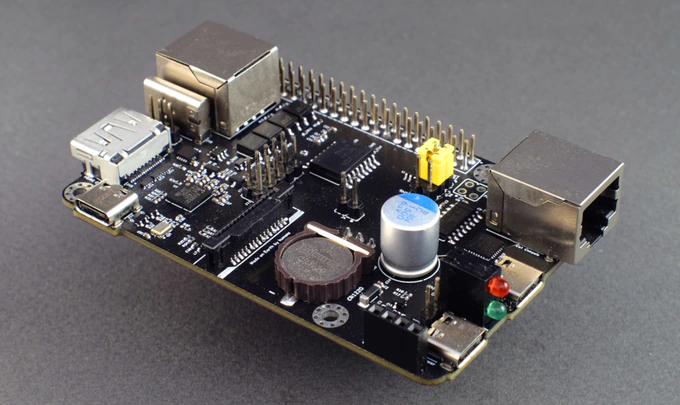
In the summer of 2020, we made our first prototype of the v3 HAT. We began debugging it, improved some parts of the design (for example, we replaced the lithium cell by a supercapacitor); we were ready to start production by the new year!
That’s when the problems started… First, the new wave of COVID was accompanied with a disruption of the global supply chain system. In addition, the demand for video cards (due to the growth of cryptocurrencies) caused a severe, global chip shortage. The prices for some chips just exploded… There were no alternatives for some of the PiKVM HAT components; this significantly increased the material cost. Overall production cost increased by almost 50% from what we were originally planning for.
Our problems did not end there! The biggest disappointment was just ahead of us… We attempted to start production locally, thinking it would make it easier for us to control the product quality, but it turned out that the delay before the production could start was way too long. Budget concerns and limitations would also significantly slow down the project as we would have to gradually increase the batch quantity once we sell the previous batch (remember to add the previously mentioned production delays).
Another underestimated challenge that would further increase the cost and slow down the project was the complexity of international logistics and import/export processes—believe me, in some countries, it is much more difficult, costly and complicated than in others
Fortunately, we managed to solve all these problems! We added more resources and experience to this great project by partnering with the PiShop.us team. They believe in our project, and now, together, we’re setting up a scalable manufacturing line and preparing for global distribution. They are helping us prepare for this campaign and make the first production batch so that we can provide as many devices as required for this campaign. We can rapidly expand the production as the demand grows. By producing larger batches, we will be able to reduce the cost of the components. With the help from the PiShop.us team, we’re maintaining strict quality control procedures so you trust the PiKVM quality!